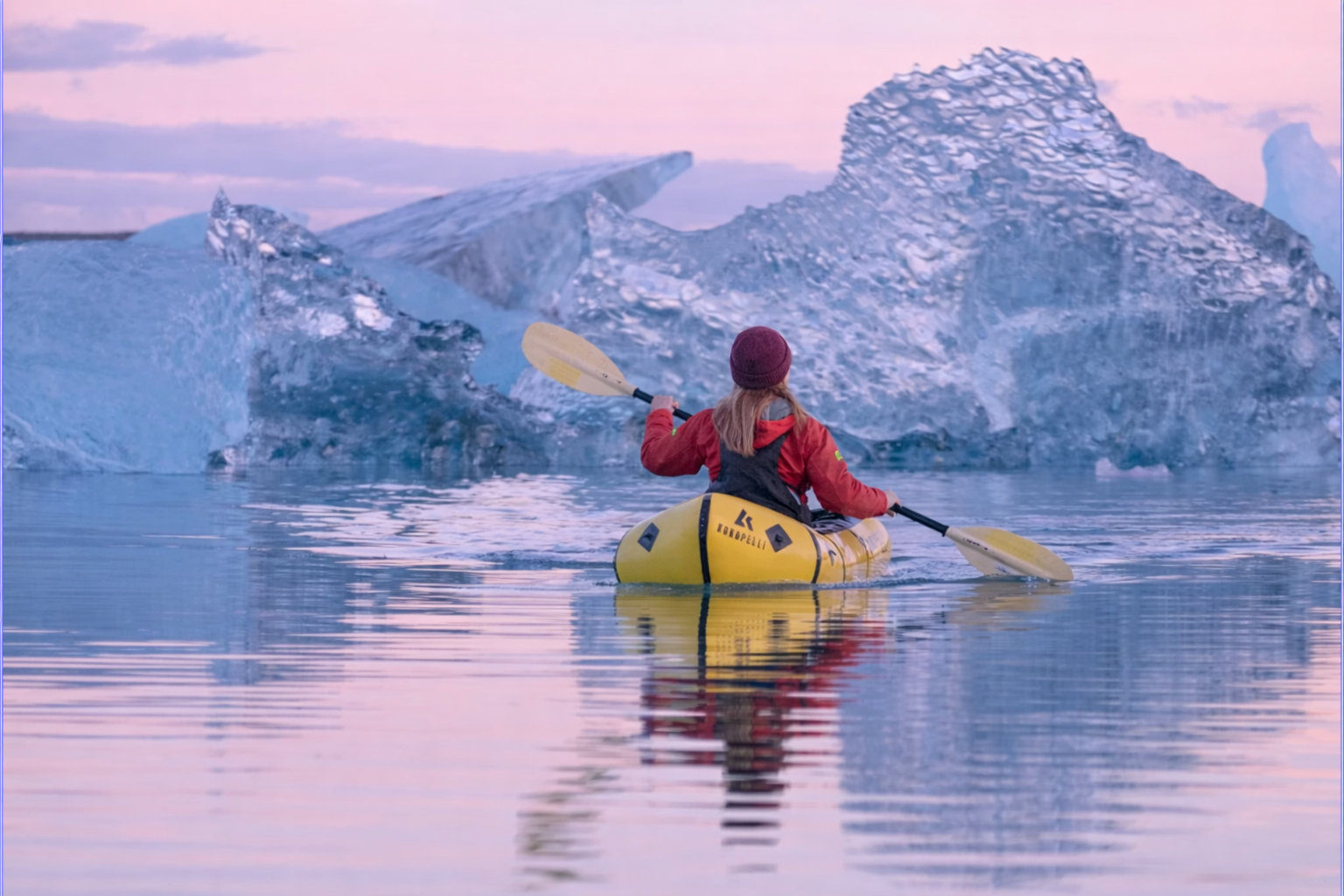
Iceland's deepest lake, its most famous icebergs — and the perfect pairing with Fjallsárlón.
If you are planning a trip along Iceland's south coast, here is the single most useful thing to know: Fjallsárlón and Jökulsárlón are only about 10 minutes apart. They sit side by side beneath the Vatnajökull ice cap, and reaching one means you are practically already at the other. So if your schedule allows it at all, the smartest move is simple — visit both.
It is not that one lagoon "wins." It is that each has its own character, and seeing them back to back gives you the full story of an Icelandic glacier lagoon rather than half of it:
Start at Fjallsárlón for the calm, close-up experience, then continue east to Jökulsárlón for the grand scale and the famous views. You get the emotional, hidden-gem moment and the bucket-list icon in the same afternoon — and you only have to drive ten minutes between them.
This guide focuses on Jökulsárlón: what it is, how to reach it, when to go, what to see, and the most popular tours you can book to make the most of your visit.
Jökulsárlón is Iceland's largest and deepest glacier lagoon, fed by the retreating Breiðamerkurjökull outlet of Vatnajökull. Here is the quick reference before you go.
| Location | Southeast Iceland, directly on Route 1 (Ring Road), within Vatnajökull National Park |
| From Reykjavík | Approx. 370 km (230 miles), about 5-6 hours of driving |
| Entrance fee | Free — no charge to visit the lagoon or walk the shoreline |
| Parking | About 1,000 ISK (~$8 USD) per day, covering the lagoon and Diamond Beach |
| Opening hours | Open 24/7, year-round — no gates, no closing time |
| Depth | Around 248 m (814 ft) — Iceland's deepest lake |
| How long to stay | 1-2 hours for the lagoon alone; 3-5 hours with Diamond Beach and a boat tour |
| Facilities | Restrooms, a small café, seasonal food trucks, EV charging |
Jökulsárlón has been called Iceland's crown jewel, and the description holds up. The lagoon began forming in the 1930s, when the Breiðamerkurjökull glacier started retreating from the coast. In less than a century it has grown into the deepest lake in the country — and one of its most beloved sights. The icebergs drifting across its surface are fragments of ice compressed over a thousand years, streaked with black volcanic ash and glowing in shades of white and electric blue.
The simplest experience is also the most powerful. Walk along the water's edge and watch the icebergs drift — some refrigerator-sized, some as large as a building. They move with impossible slowness, occasionally rolling or calving with a splash. Walking west from the main viewpoint leads to quieter spots with equally dramatic perspectives.
Harbor seals live at Jökulsárlón year-round, swimming between the icebergs and resting on the floes. They are curious animals and often surface close to shore to watch visitors right back. In summer the lagoon is also busy with Arctic terns, skuas, and other seabirds.
Just a 5-minute walk across the Ring Road, Diamond Beach is where chunks of glacier ice wash up on jet-black volcanic sand — one of Iceland's most photographed scenes. It is free, it shares the lagoon's parking zone, and it is endlessly photogenic. Allow 30-60 minutes.
From roughly May to October, boat tours let you glide right among the icebergs. Amphibian boats are gentle and family-friendly, zodiac tours are faster and more adventurous, and kayaking is the most immersive of all. Each puts you on the water in a way the shoreline cannot match.
Jökulsárlón's remote location means almost no light pollution, making it one of the best places on Earth to watch the aurora reflect off ice and water on a clear winter night. The lagoon's otherworldly look has also drawn filmmakers for decades — it has appeared in two James Bond films, Batman Begins, Lara Croft: Tomb Raider, and more.
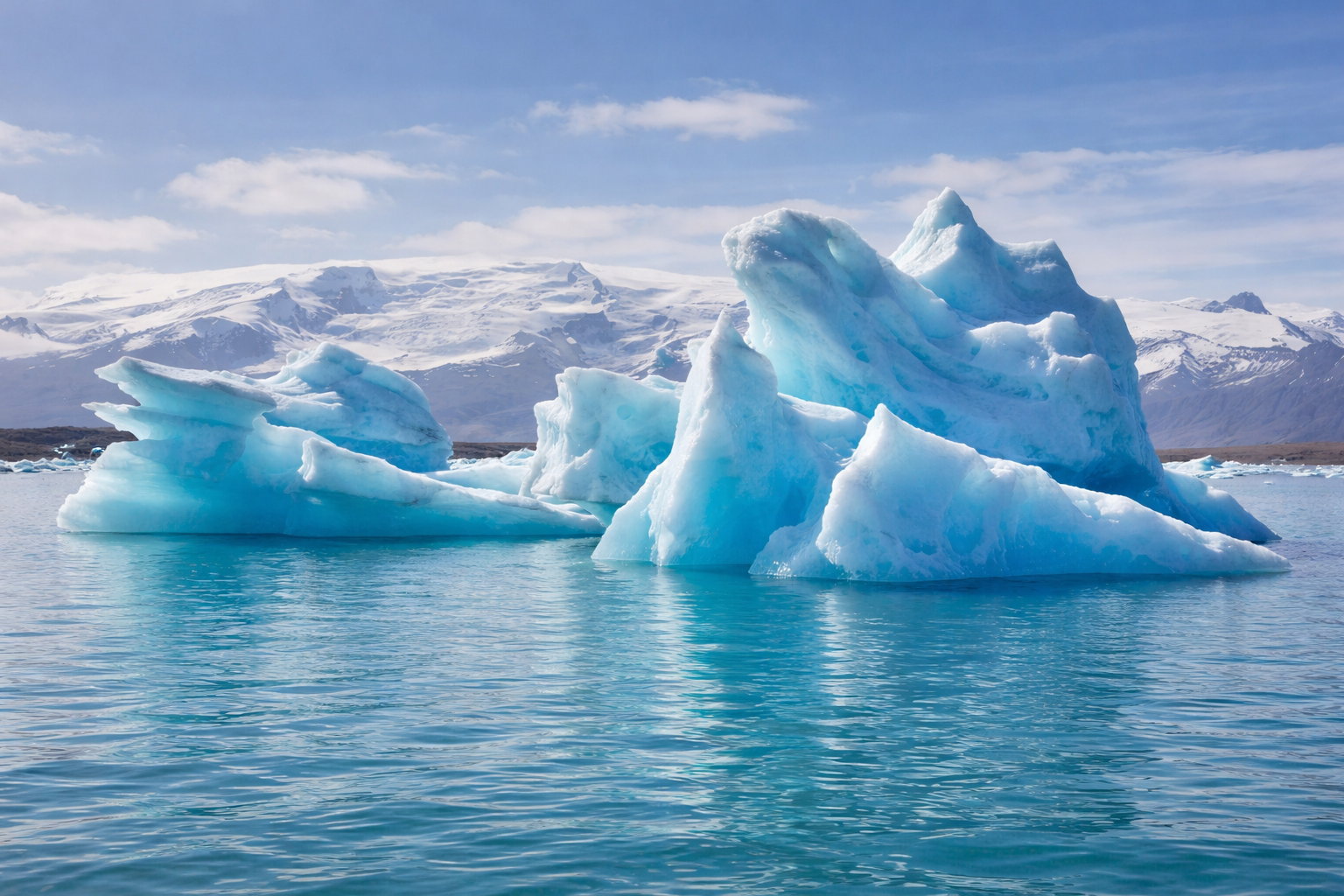
Jökulsárlón sits directly on Route 1, roughly halfway between the Skaftafell area and the town of Höfn. The lagoon is visible from the road — you genuinely cannot miss it.
The drive is about 370 km and takes 5-6 hours in good conditions. The route passes Seljalandsfoss and Skógafoss waterfalls, the village of Vík, and Reynisfjara black sand beach. Most travelers break the journey into a multi-stop South Coast trip rather than racing out and back in one day.
Vík is about 2.5 hours west; Höfn is roughly 1 hour east and is the nearest town with full services — fuel, supermarket, and restaurants. Both make practical bases for visiting the lagoon area.
Guided day tours from Reykjavík cover the South Coast route with Jökulsárlón as the highlight. They are long days (around 14 hours) but handle all the driving — a popular choice for travelers who would rather not self-drive the Ring Road, especially in winter.
From October through April, expect icy patches, blowing snow, and fast-changing weather. A vehicle with winter tires is strongly recommended, and you should always check road.is and the weather forecast before setting out.
Every season offers something different — there is no bad time, only a different one.
Boat tours and kayaking are running, daylight is nearly endless, wildlife is most active, and driving is easiest. It is also the busiest season — visit early morning or late evening to enjoy the lagoon with fewer people and softer light.
Crowds thin out, boat tours still run into October, and the returning darkness brings northern lights potential. Low-angle autumn light makes the icebergs glow. Weather is less predictable, but flexible travelers are well rewarded.
The lagoon turns stark and ethereal. Boat tours pause, but ice cave tours into Vatnajökull depart from the Jökulsárlón parking lot, and the northern lights can be spectacular over the ice. Daylight is short, but those few golden hours are extraordinary for photography.
Daylight grows quickly, the ice cave season tails off in early April, and boat tours begin again in May. Fewer visitors than summer, with a sense of the landscape coming back to life.
These are among the highest-rated, most-booked tours that take you to Jökulsárlón Glacier Lagoon. Check live availability and prices below.
The #1-selling South Coast day trip — a guided full-day bus tour from Reykjavík to Jökulsárlón, with stops at Diamond Beach and Seljalandsfoss waterfall, and an optional lagoon boat cruise.
An easy guided walk across Falljökull, an outlet of Vatnajökull, near Skaftafell — all crampons and safety gear provided. A natural add-on for a Jökulsárlón area itinerary.
A classic bus tour along Iceland's south shore to the glacial lagoon and the black-sand Diamond Beach, with insightful commentary from your guide along the way.
A guided tour from Reykjavík to Jökulsárlón with a walk to the edge of the lagoon, time among the drifting icebergs, and a stop at Diamond Beach — boat tour option available.
Strap on crampons and hike Vatnajökull, Iceland's largest glacier, starting straight from the Jökulsárlón lagoon. Encounter crevasses and unforgettable ice scenery with an expert guide.
A small-group South Coast tour combining Jökulsárlón lagoon with the dramatic Fjaðrárgjúfur canyon — a highly rated option for travelers who want scenery beyond the lagoon itself.
Jökulsárlón is the icon, but it is only half the glacier-lagoon story on this stretch of coast. Ten minutes west, Fjallsárlón offers a quieter, more intimate counterpart — the glacier wall close to shore, a smaller basin, and far fewer people. Pairing the two is the itinerary most travelers wish they had planned.
Visiting both? See how the two lagoons compare, then book the quieter one before the crowds arrive.
Read the Full Comparison Explore Fjallsárlón ToursHelpful answers for travelers planning a visit to Jökulsárlón Glacier Lagoon and the surrounding area.
No. Visiting the lagoon and walking its shoreline is completely free. The only on-site cost is a parking fee of about 1,000 ISK (roughly $8 USD) per day, which also covers parking at Diamond Beach across the road.
Jökulsárlón is only about 10 km (6 miles) east of Fjallsárlón, roughly a 10-minute drive on the Ring Road. Because they are so close, most travelers with time visit both lagoons in the same stop.
Yes, but it is a long day. Jökulsárlón is about 370 km from Reykjavík, so a self-drive day trip means 10-12 hours of driving plus time at the lagoon. Guided day tours handle all the driving and are a popular, less tiring option.
Boat tours on Jökulsárlón operate from roughly May through October, when the lagoon is ice-free enough to navigate. Amphibian boats, zodiac tours, and kayaking are all available in summer. In winter the boats stop, but ice cave tours run instead.
Summer (June-August) is best for boat tours, long daylight, and easy driving. Autumn and winter bring fewer crowds, northern lights, and ice cave tours, with dramatic low-angle light. The lagoon is worth visiting year-round, so the best time depends on the experience you want.
Yes. Diamond Beach is directly across the Ring Road from the lagoon, about a 5-minute walk from the main parking area. Chunks of glacier ice wash up on the black volcanic sand, and the same parking fee covers both sites.