From the glacier area
Shorter transfer, more time at the cave. Ideal if you are already staying near Fjallsárlón, Jökulsárlón, or anywhere on the south coast. The best way to experience ice caves without spending half the day in a vehicle.
Blue chambers inside Vatnajökull glacier — a winter-only experience from the Fjallsárlón area
Iceland's ice caves are among the most surreal sights on Earth — glowing blue chambers carved inside Vatnajökull glacier, the largest ice cap in Europe. The compressed ice absorbs every colour of the spectrum except blue, scattering it back as an intense, otherworldly glow that photographs cannot fully capture.
The essentials: natural blue ice caves are a winter experience, accessible roughly November through March, and they can only be visited safely on a guided tour. The best base is the south coast, right here at the Fjallsárlón and Jökulsárlón area — most tours depart from within a few minutes of the glacier lagoons.
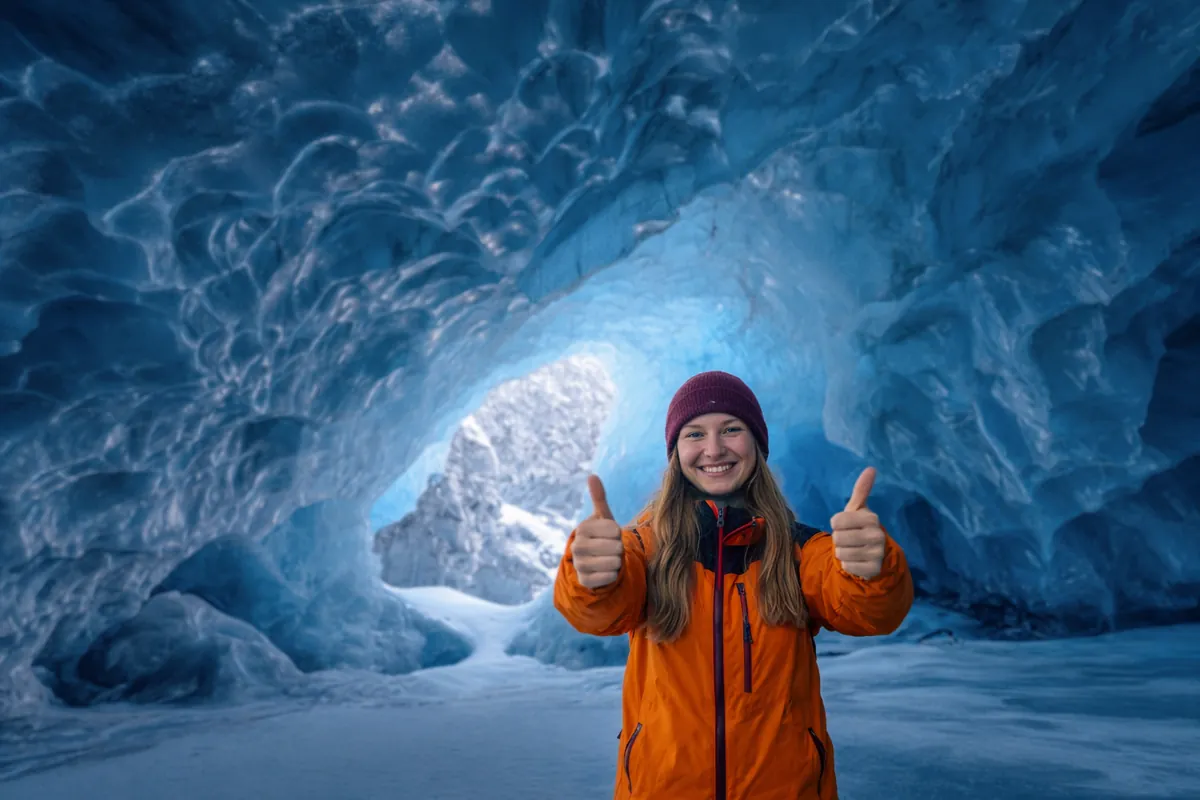
Ice caves form inside and beneath glaciers when meltwater carves tunnels through the ice. In winter, the water drains and the caves freeze solid, leaving walls of dense, ancient, air-free ice that glows an intense blue where light filters through. Because glaciers are always moving and reshaping, no two seasons produce the same caves — each winter, guides scout entirely new formations.
The ice you are standing inside is compressed snow from hundreds or thousands of years ago. Dark lines running through the walls are volcanic ash layers from Icelandic eruptions frozen in time.
Ice cave season runs November through March — exactly when the glacier lagoons are at their most photogenic and aurora chances are highest. While you're in the Fjallsárlón and Jökulsárlón area, consider adding a Zodiac boat tour on the glacier lagoon, an overnight at the Fjallsárlón Aurora Hut for northern lights viewing, ice floating among the icebergs, or a glacier hike on Vatnajökull's surface. The south coast of Iceland in winter rewards travelers who plan more than a single activity.
Visiting before the cave seasonNatural ice caves at Fjallsárlón open in mid-October. Until then the blue ice, the crevasses and the ice walls are all reachable on a glacier hike at Skaftafell, 40 minutes west.
Ice cave season overlaps exactly with aurora season (September–April). Combining a daytime cave tour with evening aurora hunting from the glacier lagoon is one of the most rewarding ways to spend a winter week in southeast Iceland.
The classic, naturally formed winter caves near the Jökulsárlón and Fjallsárlón area. Deep blue walls, ever-changing formations, volcanic ash streaks frozen into the ice. These are the caves that define Iceland's winter season and the reason most visitors come in the colder months.
Names operators give to particularly clear, brilliantly blue Vatnajökull caves each season. The cave locations change every winter — guides scout them fresh — so "crystal cave" refers to quality rather than a fixed location.
Engineered tunnels bored into Langjökull glacier, open all year as a predictable alternative. More structured and accessible, but a different experience from the wild, naturally formed Vatnajökull caves.
Located near the south coast under Mýrdalsjökull glacier, sometimes accessible outside the deep-winter window. Darker walls than Vatnajökull (more volcanic ash), with a different character. A useful option for travelers in the shoulder seasons who want some cave experience.
These are among the highest-rated, most-booked ice cave tours departing from the Jökulsárlón and Fjallsárlón glacier lagoon area. Check live availability and prices below.
Travel by 4x4 to a captivating blue ice cave in Breiðamerkurjökull. Expert guides, an easier crowd-avoiding schedule, and warm soup plus a hot drink included at Frost Restaurant afterwards.
Check availability & pricesOne of the most popular and long-running ice cave tours from Jökulsárlón — super jeep transport to the glacier edge, certified guides, crampons and helmet provided.
Check availability & pricesDeparts from Jökulsárlón with 4x4 transfer to Vatnajökull. Focuses specifically on the natural blue ice formations, with expert glacier guides and all safety equipment included.
Check availability & pricesThe highest-reviewed ice cave tour in the Vatnajökull area — a straightforward, well-run guided experience inside the glacier with full equipment and certified guides.
Check availability & prices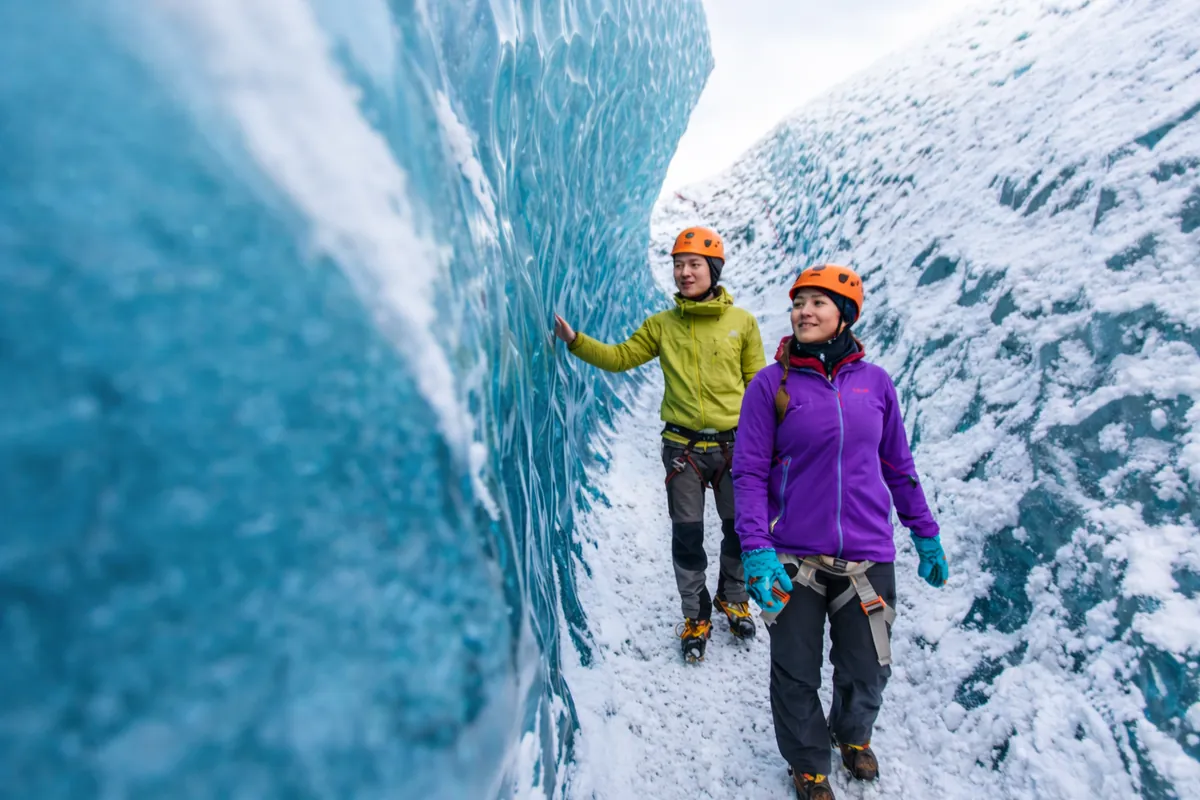
If you want to go deeper than a cave tour, glacier hiking lets you walk across the surface of Europe's largest ice cap. Year-round guided hikes depart from the Jökulsárlón area and take you onto Vatnajökull or its outlet glaciers — crampons, ice axe, and helmet provided, no mountaineering experience needed.
For the Jökulsárlón glacier hiking tour, see tour 418251 on our Jökulsárlón guide — it departs directly from the lagoon parking area.
You can reach Vatnajökull ice caves either as a long day trip from Reykjavík or as a shorter tour if you are already based on the south coast. The difference matters:
Shorter transfer, more time at the cave. Ideal if you are already staying near Fjallsárlón, Jökulsárlón, or anywhere on the south coast. The best way to experience ice caves without spending half the day in a vehicle.
Possible as a very long full-day trip — expect roughly 8–10 hours round-trip driving plus the tour itself. Guided day tours handle all logistics. Worth it if staying on the south coast is not an option.
Our recommendation: base yourself at or near the glacier lagoons for at least one night. You get the cave tour without the driving, and you can combine it with a visit to Fjallsárlón, Jökulsárlón, and aurora watching in the evening.
Most tours work the same way: super-jeep or 4x4 transfer from near the glacier lagoon to the glacier edge, a short briefing and crampon fitting, then guided walking into and around the cave.
Glaciers are dynamic environments riddled with hidden crevasses, unstable ice, and rapidly changing conditions. Professional guides scout the caves before each visit, carry emergency equipment, and know when to turn back. Reputable operators check conditions the morning of every tour.
Never enter a glacier or ice cave independently. This applies even if you can see the opening from the road — internal conditions are completely different from what is visible at the entrance.
Answers to the questions most visitors ask before booking a glacier cave tour.
Natural blue caves: November–March, with December–February most reliable. Man-made ice tunnels in Langjökull run year-round as an alternative.
Not the natural blue caves — summer meltwater makes them unstable and they are closed. Man-made ice tunnels at Langjökull operate all year. If seeing natural blue Vatnajökull caves is your priority, plan a winter trip.
Yes. Natural ice caves are only accessible with a certified guide for safety. Guides scout caves before each visit and provide all safety gear. Never enter a glacier independently.
Most natural blue caves are inside Vatnajökull, accessed from around the Jökulsárlón and Fjallsárlón area on the south coast. This stretch of the Ring Road is the closest base for almost all Vatnajökull cave tours.
With a reputable operator and proper gear, yes. Guides carry safety equipment and make daily decisions about whether conditions are right to enter. Tours are cancelled when conditions are unsafe — most operators offer rebooking or refunds in those cases.
Staying near Fjallsárlón or Jökulsárlón means shorter transfers and more time at the cave. A Reykjavík day trip is possible but involves many hours of driving. Most visitors who prioritise the ice cave experience stay on the south coast for at least one night. See our best time to visit Fjallsárlón guide for south coast planning.