A month-by-month guide to planning your Iceland trip around what you want to see
There is no single best time to visit Iceland — it depends on what you want to see. Summer (June–August) is best for road trips, glacier boat tours, and long daylight. Winter (November–March) is best for the northern lights and ice caves. The shoulder seasons (May, September) offer the best balance of good conditions and thinner crowds.
For travelers focused on southeast Iceland and the glacier lagoons around Vatnajökull, the timing question also involves which tours are running: boat tours at Fjallsárlón typically operate April through November, while ice cave tours run from mid-October to mid-April, and the Aurora Hut has a summer edition (June–September) and a winter edition (October–November and March–May).
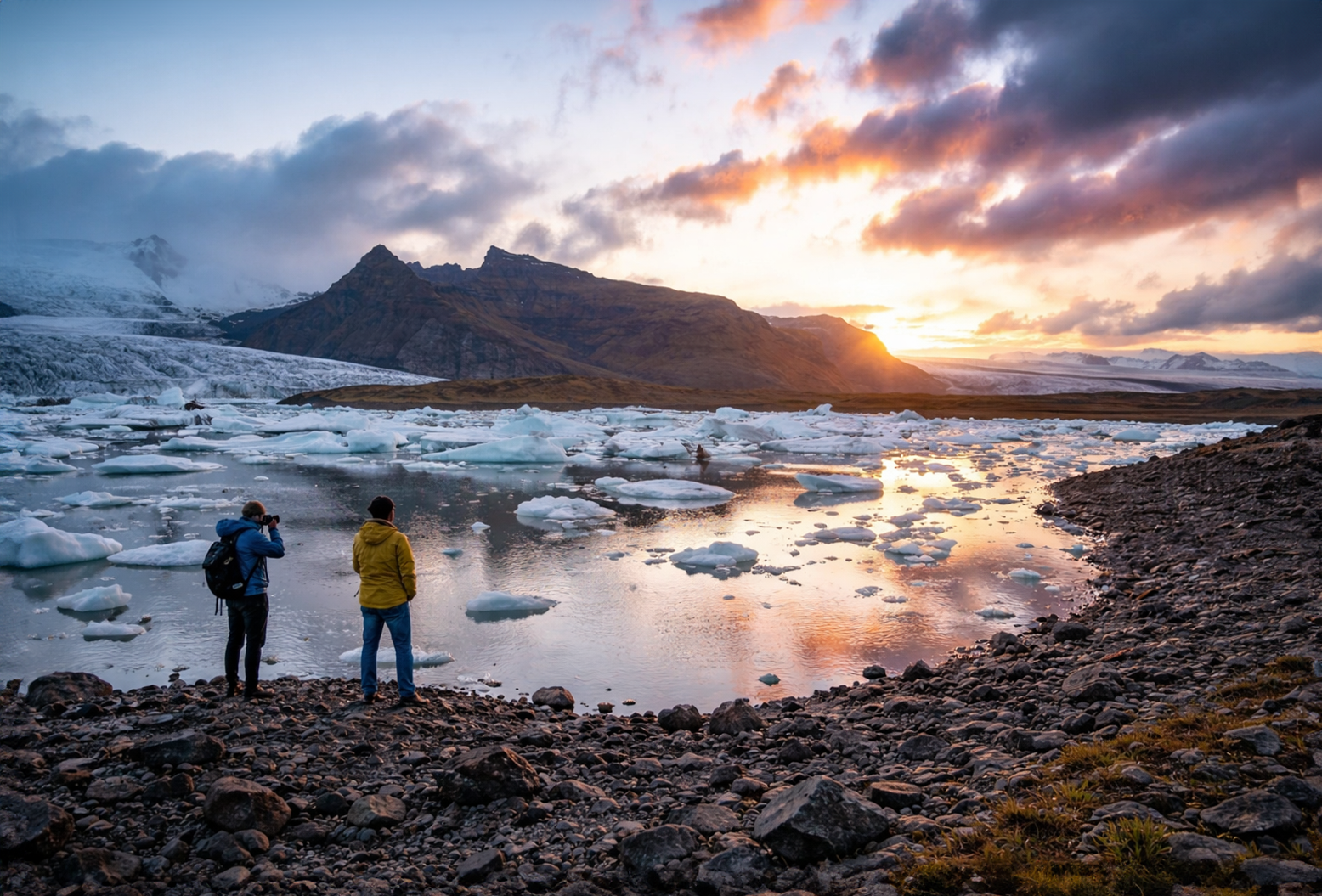
September on the south coast: boat tours still running, first dark nights for aurora.
Fjallsárlón glacier lagoon is one of the most memorable stops in southeast Iceland, but the region offers more in every season. Whether you're planning for the blue ice caves of Vatnajökull in winter, Zodiac boat tours and kayaking on the glacier lagoon in summer, aurora hunting at Jökulsárlón and Diamond Beach in autumn, or exploring the full South Coast of Iceland from Seljalandsfoss to the glacier lagoons — there are highly rated tours available for every month of your trip.
Month-by-month guide
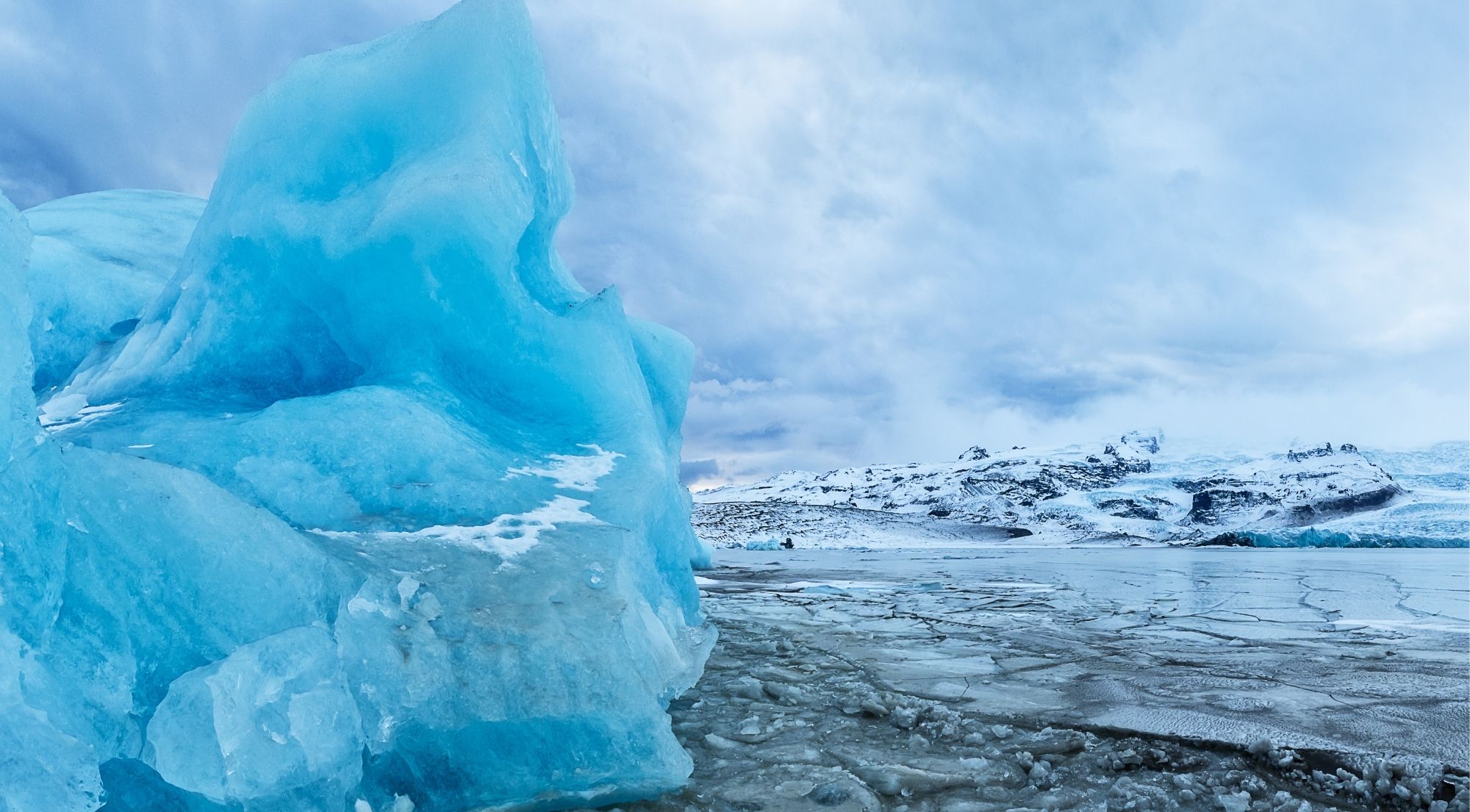
Winter turns the lagoons into frozen sculpture parks — and opens the ice cave season.
January & February – Deep winter
Long, dark nights make this prime northern lights and ice cave season. Roads in the interior are closed, but the Ring Road and south coast stay accessible with care. Cloud cover is at its most unpredictable, so build spare days into your itinerary. For dedicated aurora hunters, late February is especially good — daylight is returning (7–9 hours) while aurora odds remain strong.
March – The sweet spot for winter activities
One of the best all-round months: still excellent for aurora viewing, days lengthening to 10–13 hours, and improving weather. The last reliable month for blue ice caves before they become unstable — and boat tours at Fjallsárlón typically resume April 1, so March is the final week to combine late-season cave tours with aurora evenings.
April – Shoulder into spring
Aurora is fading but possible in early April. Boat tours resume, daylight grows to 13–16 hours, and crowds remain low. A strong choice for first-time visitors who want flexibility without peak-season pricing.
May – Quietly excellent
Long days return, waterfalls run full from snowmelt, highland roads begin to reopen, and crowds haven't peaked. No northern lights in May — the sky stays too bright — but golden-hour light lasts for hours and all boat tours are running. A well-kept secret for travelers who want summer atmosphere without July prices.
Summer glacier lagoon tours
May through September is the main season for glacier lagoon kayaking at Fjallsárlón — a close-up, paddle-powered way to move among the icebergs.
Nearly 24 hours of daylight, ideal for glacier lagoon boat tours and road trips. June is typically the driest month in the southeast and all tours operate, including Zodiac tours, kayaking, ice floating, and glacier hikes. No auroras, but late-evening "midnight twilight" creates pink-and-gold glacier light that photographers love. Peak season starts — book tours and accommodation ahead.
July – Warmest and busiest
Everything is open and operating: boat tours, highland roads, kayaking, ice floating. The most forgiving month logistically for first-time visitors. Book the Fjallsárlón Zodiac tour well in advance — it sells out in July. Fjallsárlón stays calmer than Jökulsárlón even at peak season.
August – Late summer, aurora returns
Still peak summer with long daylight (15–19 hours). From mid-to-late August, real darkness returns and the first aurora sightings of the season become possible. All tours are running and the glacier lagoon stays full and photogenic. One of the most versatile months: open water, possible northern lights, and the last of the summer crowds before September.
September – The top shoulder month
Aurora season is fully back. September often delivers the clearest dark-sky nights of the whole season. Crowds drop sharply after the first week, boat tours and kayaking at Fjallsárlón are still running, and the lagoon stays open and ice-filled. The single best month for travelers who want aurora chances without needing winter driving skills or ice-road conditions.
October – Transition to winter
Aurora odds are strong, prices drop, and the landscape shifts to autumn colours. Boat tours at Fjallsárlón still operate; kayaking ends. Ice caves are not yet open for the season. October is the "delightfully empty" month — the best for unhurried photography at the lagoon without competition for a good spot.
November & December – Winter proper
Short days (6–4 hours), festive atmosphere in Reykjavík, northern lights, and the start of ice cave season. Boat tours run through late November before pausing. For ice cave and aurora fans, November offers a brief window where both overlap at Fjallsárlón — open water in the lagoon plus the first blue-ice cave tours of the season.
Winter blue ice cave tours
November through March is the only window for ice cave tours inside Vatnajökull. This is the same season as the northern lights — making southeast Iceland the most compelling destination in Iceland for winter visitors.
Iceland's weather is famously changeable — locals say "if you don't like the weather, wait five minutes." Summer highs sit in the low-to-mid teens Celsius; winter near the coast hovers around freezing, milder than many expect thanks to the Gulf Stream. Wind and rapid change matter more than raw cold. Pack layers, waterproofs, and windproofs in every season.
For southeast Iceland around Vatnajökull, October is typically the wettest month (around 236 mm at nearby Höfn), while June is usually the driest. Winter storms can close mountain passes, but the Ring Road generally stays open year-round with appropriate driving care.
The most common planning questions answered before you book.
What is the overall best month to visit Iceland?
For most travelers, September — you still get summer activities including boat tours at Fjallsárlón, plus the return of the northern lights and much thinner crowds. For pure summer road-tripping, June or July. For ice caves and dedicated aurora hunting, aim for February or March. See our northern lights timing guide for the winter side in more detail.
What is the cheapest time to visit Iceland?
The off-season shoulders — roughly October–November and April–May, outside of major holidays. Flights, accommodation, and tour prices all drop significantly compared to peak summer.
When is peak season in Iceland?
Mid-June through August. Book tours and accommodation well ahead — popular glacier lagoon tours and unique experiences like ice floating and Zodiac tours at Fjallsárlón sell out during these months.
When can you see the northern lights in Iceland?
Late September to early April. The aurora is not visible in summer because the sky does not get dark enough. For a full guide to timing and planning, see best time to see the northern lights in Iceland.
When do glacier lagoon boat tours run?
Glacier lagoon boat tours at Fjallsárlón typically operate April through November, with all tours running in summer. They pause during deep winter when conditions don't allow safe operation. For current availability, see the Fjallsárlón boat tours page.