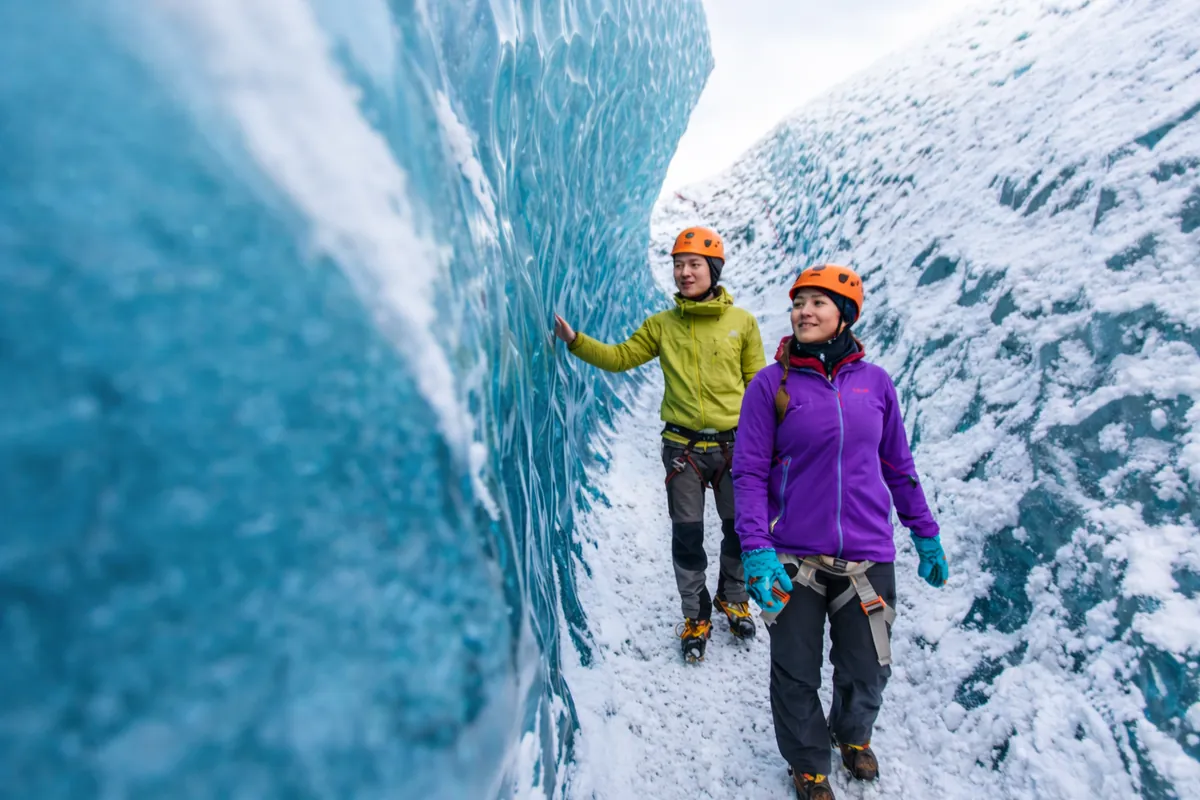
Where to walk on the ice, how hard it is, and what it costs.
Walking on a glacier is one of Iceland's most thrilling experiences — strapping on crampons and stepping out onto a river of ancient ice, past deep-blue crevasses and towering ridges. This guide covers where to hike, how difficult it is, the best time to go, and how to pair a glacier walk with a lagoon boat tour in the southeast.
The essentials: glacier hikes always require a certified guide and proper gear, and most run year-round, with different seasons offering different terrain.
The most-booked glacier hike in the country is the easy group walk on Falljökull from Skaftafell — 3 hours, 4.6 stars from 1,678 reviews on GetYourGuide, from $106, minimum age 8. Live dates and prices are below.
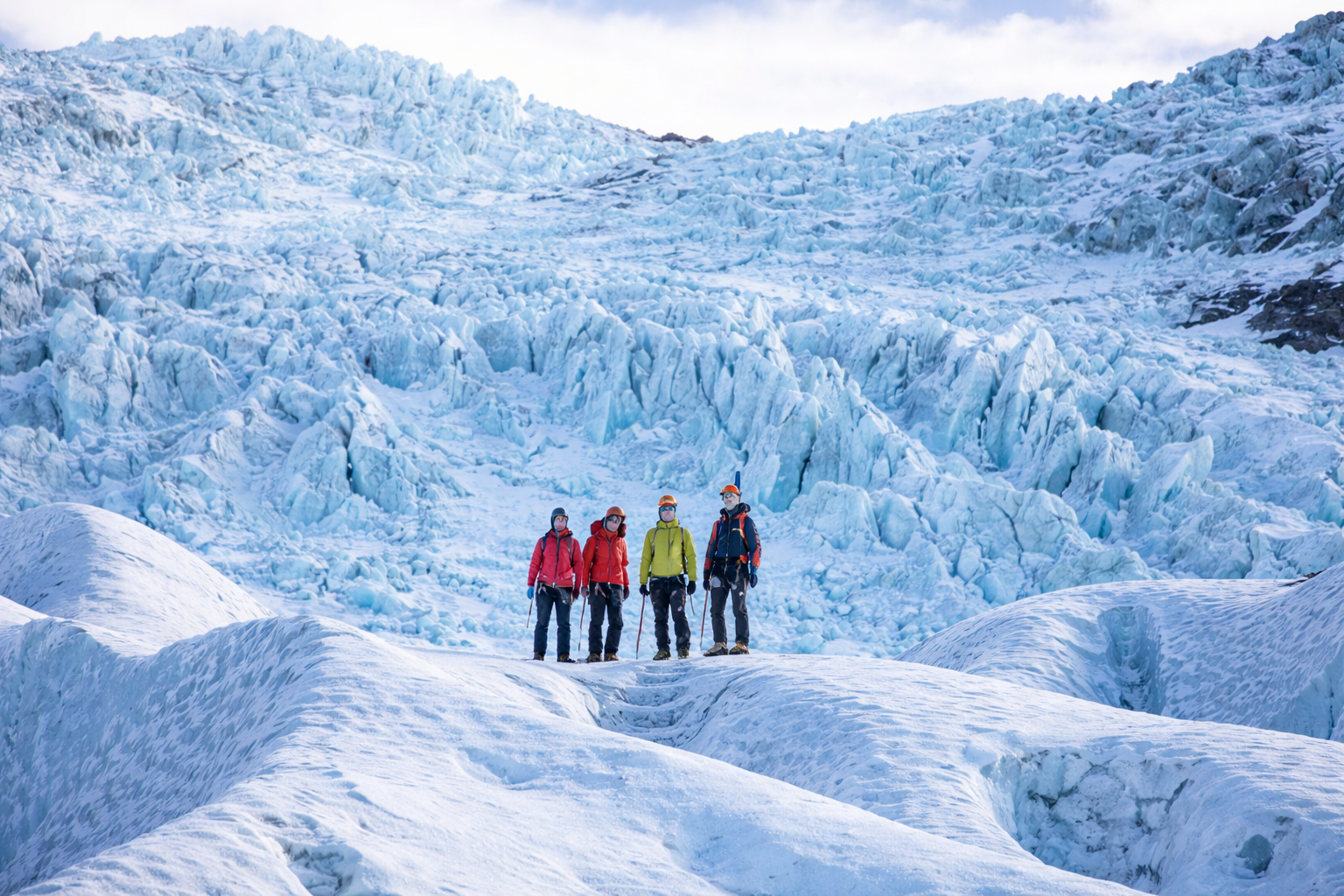
Iceland is one of the easiest places on Earth to safely walk on a glacier. Guided tours make the ice accessible to people with no prior experience — you'll get a briefing, crampons, and a guide who knows the safe routes through ever-shifting ice.
That last point is the one that matters. A glacier is not a fixed landscape: meltwater opens new crevasses through the summer, snow bridges them over in winter, and a route that was solid last week can be gone this week. What you are paying for is not only the crampons but the guide who walked the ice that morning.
Most glacier hikes are sold alongside the other things their region does well. In the southeast that means Vatnajökull, the Fjallsárlón and Jökulsárlón glacier lagoons, Diamond Beach, and the blue ice caves that open inside the ice cap from November. On the south coast it means Sólheimajökull paired with Seljalandsfoss, Skógafoss and the black sand at Reynisfjara, usually as a long day from Reykjavík. Ice climbing intros, Skaftafell hiking and kayaking among icebergs round out the same trip. Browse what is bookable below.
Day tours from Reykjavík usually head to Sólheimajökull on the south coast — the closest glacier tongue, roughly 2–2.5 hours' drive. For hikes on Vatnajökull, you're better off basing yourself in the southeast near the glacier lagoons to avoid a very long day.
Two Reykjavík departures are worth knowing, and they are not the same trip. One is a full sightseeing day with a hike attached; the other is a hike with an ice-climbing session attached.
No prior experience is needed for intro walks — just a reasonable level of fitness and sturdy footwear.
Minimum ages vary by operator and are worth checking before you book rather than at the meeting point. The easy Falljökull group hike from Skaftafell takes children from age 8; the Fjallsárlón hike that starts with a zodiac crossing is 14 and over. Each tour's GetYourGuide page states its own minimum age and fitness requirement, and operators do enforce them.
Glacier hikes run year-round, but the seasons differ:
The seasons also change what the ice looks like. Summer melt scours the surface clean and opens the crevasses that make the blue so vivid; winter snow smooths it over and softens the shapes, but buys you the caves. Our best time to visit Iceland guide sets the whole calendar out month by month.
Operators typically provide crampons, a harness, an ice axe, and a helmet.
The boots are the one item people get wrong. A crampon needs a stiff sole and a heel to grip, and a trainer gives it neither — turning up in soft shoes is the most common reason someone is turned away at a meeting point. Most operators rent boots for a small fee if you say so when booking.
The southeast is the one place you can do both in a day: hike an outlet of Vatnajökull in the morning, then cruise among icebergs at Fjallsárlón or Jökulsárlón in the afternoon. It's the ultimate glacier-country day. See our Fjallsárlón Glacier Lagoon guide.
One operator sells the whole thing as a single booking, which saves you timing two meeting points against each other.
What first-timers ask before they book a walk on the ice.
No — intro tours are designed for beginners, with a guide and all technical gear provided. You get a briefing, crampons, a harness, an ice axe and a helmet, and the guide picks the safe route through ice that shifts from week to week.
No. Glaciers have hidden crevasses, and a certified guide is required for safety. Every glacier hike sold in Iceland is guided, and walking out onto the ice unguided is how most glacier accidents in the country happen.
For scenery plus proximity to the lagoons, an outlet of Vatnajökull in the southeast is hard to beat — the Falljökull hike from Skaftafell is the most-reviewed of them, at 4.6 from 1,678 reviews. Sólheimajökull is the best choice for easy access from Reykjavík.
Yes — glacier hikes run year-round, and in winter you can often pair one with a blue ice cave tour on the same trip. Winter brings snow-dusted ice and dramatic low light, at the cost of much shorter days.
Warm waterproof layers and sturdy ankle-supporting boots for the crampons. Operators may refuse soft shoes, because crampons will not attach to them. Bring gloves, a hat, sunglasses, water and snacks; the operator provides crampons, a harness, an ice axe and a helmet.
Intro walks run about 1.5 to 3 hours on the ice — the Skaftafell Falljökull group hike is a 3-hour tour. Longer and more advanced routes run 4 hours or more, and day tours from Reykjavík take around 11 hours door to door because of the driving.
Hike the ice in the morning, cruise the icebergs after.
See Fjallsárlón Boat Tours