Best Time to Visit Fjallsárlón: Boat Tours, Ice Caves & Weather

If your dates are flexible, June to September is the best time for a first visit focused on Fjallsárlón itself, when the Zodiac boat tours, ice floating and the glacier hike and boat combination are all running and the days are long. If a natural ice cave is the main reason for your trip, November to March is the core season, with some tours starting in October or continuing into April when conditions allow.

This guide compares the months at the lagoon, shows which tours run in each, and lets you check the tours, daylight and forecast for your exact date.

The short answer

Fjallsárlón can be visited year-round, but the tours change with the season. The standard Zodiac boat tour runs from April to November, ice floating is available throughout the year, and the glacier hike and boat combination runs from June to September. Natural ice cave tours are mainly a winter experience, with the core season from November to March.

If your dates are flexible, June to September offers the widest choice for a first visit focused on the lagoon. You can combine the boat, ice floating and glacier activities, and June's almost 21 hours of daylight make the drive and sightseeing easier.

If a natural ice cave is your priority, choose November to March instead. Around the edges of the season, some tours may begin in October or continue into April when ice conditions are safe.

April and November are the transition months, when the boat and ice cave seasons can overlap, although availability becomes more weather-dependent. Whatever month you visit, check the forecast, tour status and road conditions before setting out; winter storms can affect both tours and Route 1.

Widest choice of activities
June to September
Standard Zodiac boat tour
April to November
Glacier hike and boat
June to September
Natural ice caves
November to March
Ice floating
Year-round
Possible seasonal overlap
April and November
Most useful live checks
Wind, precipitation, road status, tour availability
  • Daylight at the lagoon, mid-June20h 56m
  • Daylight at the lagoon, mid-December4h 18m
  • Average day high in July, Fagurhólsmýri (21 km west)13.8 °C
  • Average day high in January, Fagurhólsmýri3.9 °C

Planning a winter trip? Check ice cave dates

The Fjallsárlón operator runs its natural ice cave tour from the FROST restaurant beside the lagoon, with a 4x4 transfer to the cave. The calendar below shows live dates and prices. For a summer trip, the tours by season cover the boat, kayak and ice-floating trips.

Pоwered by GetYourGuide

Check your travel date

Pick a date to see which Fjallsárlón tours are available that month, how much daylight you will have, and the weather. Within about nine days it shows the Icelandic Met Office forecast for Kvísker, 7 km from the lagoon; further ahead it shows long-term averages from Fagurhólsmýri, 21 km west.

Showing long-term averages for September at Fagurhólsmýri, 21 km west. There is no forecast this far ahead; the forecast appears here about nine days before your date.

  • Average wind, Fagurhólsmýri7.3 m/s, moderate to fresh
  • Average day high, Fagurhólsmýri11.4 °C
  • Rain in an average September, Fagurhólsmýri190 mm
  • Daylight at the lagoon13h 07m
  • Route 1 traffic past the lagoon, September 20242,200 vehicles a day

Tours available in September: Zodiac boat tour, glacier hike and boat, ice floating, kayaking (separate operator).

On the water: Zodiac, kayaks, ice floating

  • Wind, 09:00 to 18:00
  • Rain or snow
  • Temperature

Too far ahead for a forecast. Wind, storms and ice can cancel trips on the water in any month, so book early in your stay in the southeast rather than on your last day.

Ice cave

  • Whether caves are in season
  • Wind and heavy rain or snow
  • Temperature

Natural ice caves are not in season on this date. The core season is November to March.

Possible bonus: the nights are dark enough for the northern lights at this time of year, if the sky is clear and there is activity.

See the glacier hike and boat tour

Road conditions change by the hour in winter: check road.is or umferdin.is on the morning you drive. Forecast data: Icelandic Met Office.

Other experiences on the glacier coast

Around Fjallsárlón the season changes what you can book up the coast as well: Jökulsárlón boat trips and Diamond Beach 10 minutes east, blue ice cave tours in Vatnajökull in winter, glacier hikes at Skaftafell 35 to 40 minutes west, and northern lights trips from autumn to spring. Popular options below.

What each season is best for

June to September: the widest choice

These are the months when the standard Zodiac boat tour, ice floating and the glacier hike and boat combination all run; the combination runs from June to September only. Kayaking on the lagoon, run by a separate company, Glacier and Volcano Expeditions, from the west shore, runs from May to October. Days are long, with 20h 56m of daylight in mid-June and still about 13 hours in mid-September, so a stop at Fjallsárlón fits easily around the drive from Reykjavík or a visit to Jökulsárlón, 10 minutes east.

It is also the busiest stretch of the year on this part of Route 1. Traffic past the lagoon in July and August runs at close to four times its January level, so book the glacier hike and boat ahead. Day highs at Fagurhólsmýri, 21 km west, are about 11 to 14 °C, which feels colder on an open boat on glacier water: bring a warm layer and a hat even in July.
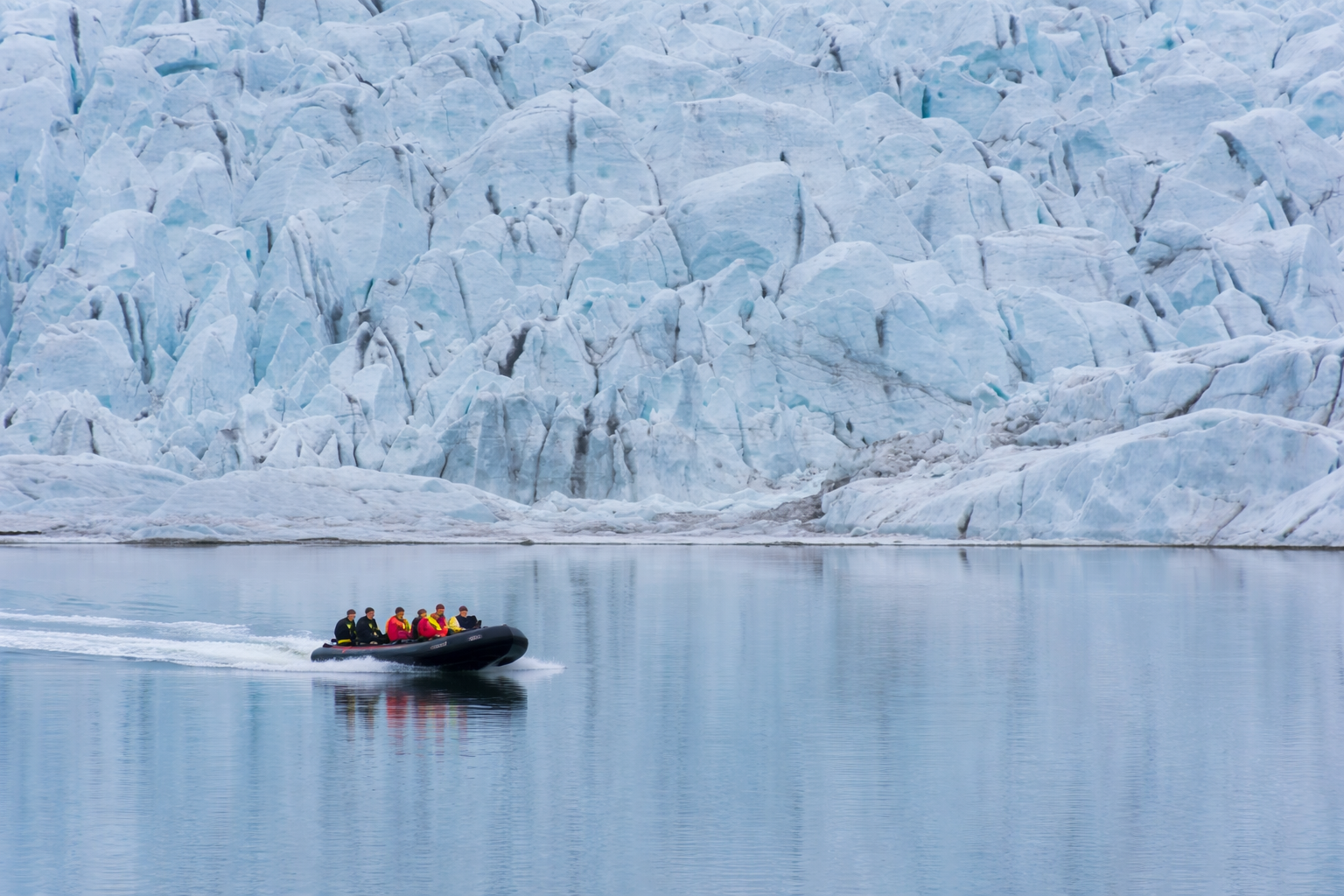
Zodiac boat among the icebergs on Fjallsárlón in summer, with the glacier face behind
The standard Zodiac boat tour runs from April to November, while the lagoon is open water.

April and November: the transition months

The standard Zodiac boat tour starts in April and ends in November, and the ice cave season meets it at both ends: the standard ice cave tour starts in November, and some ice cave tours continue into April or start in October when the ice is safe. At the edges of both seasons availability depends more on the weather, so check the dates for your tour before you plan around both.

The two months feel very different. Mid-April has 15 hours of daylight and day highs around 7 °C, while mid-November has 6h 36m and winter driving conditions on Route 1. In both months, Route 1 traffic past the lagoon is about half its August level.

May and October

In May the Zodiac and ice floating are running and mid-May has 18 hours of daylight, but the glacier hike and boat combination does not start until June. October keeps the Zodiac running and brings the first ice cave tours with some operators, although it is the wettest month of the year at Fagurhólsmýri and the days are shorter, just under 10 hours in mid-month.

November to March: natural ice caves

The Fjallsárlón operator says the lagoon freezes over in winter, and it moves from boats to natural ice caves in the glacier, reached by 4x4 from the FROST restaurant. The caves form in the cold months, and the core season for tours is November to March. The guides choose a cave that is safe that winter, so the cave you visit is not the same every year. Ice floating carries on in every month.

Winter is the quietest time on Route 1, at 601 vehicles a day in January 2024, and the shortest: 4h 18m of daylight in mid-December and 5h 25m in mid-January, with the light around the middle of the day. Late February and March keep the ice cave season with far longer days, 8h 36m in mid-February and 11h 38m in mid-March, which makes them easier months for the long drive.
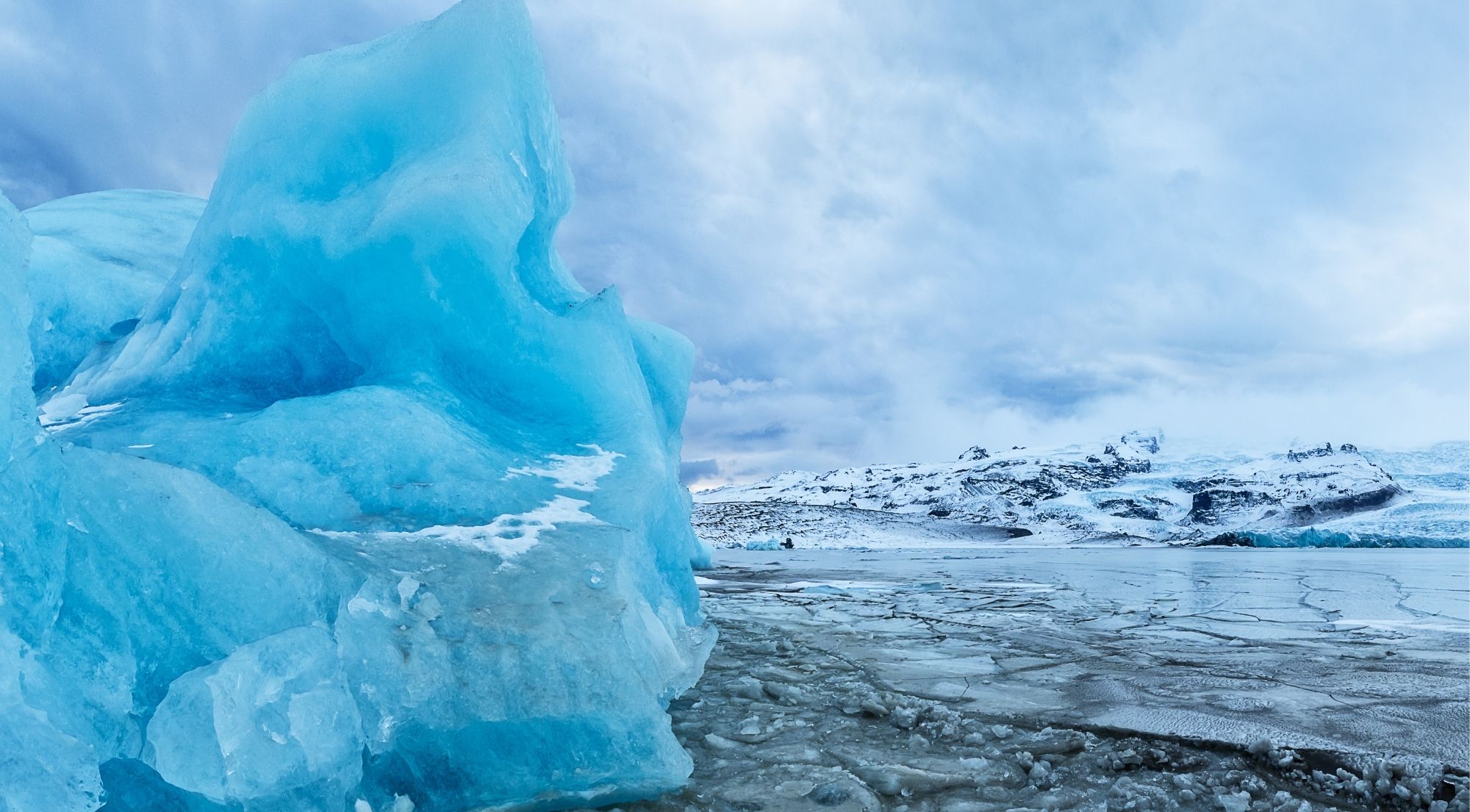
Blue iceberg held in the frozen surface of Fjallsárlón lagoon in winter
In winter the lagoon freezes over, the boats stop, and the ice cave season begins.

Checked 18 September 2026Each Fjallsárlón tour has its own season. These are the four you can book online, with the months each operator publishes.

Fjallsárlón tours by season

The standard Zodiac boat tour (April to November, about 75 minutes including kit-up) is offered by the operator at the lagoon and on its own site, not on GetYourGuide. Our boat tours page covers how it works.

Fjallsárlón month by month

Daylight is for the lagoon itself. Day highs and rain are long-term averages from Fagurhólsmýri, 21 km west along the same coast. Traffic is the average number of vehicles a day on Route 1 at Kvísker, 7 km from the lagoon, in 2024.

Month Daylight at the lagoon Day high, Fagurhólsmýri Rain in the month, Fagurhólsmýri Route 1 traffic, vehicles a day Tours available
January5h 25m3.9 °C171 mm601Ice caves, ice floating
February8h 36m3.7 °C164 mm1,042Ice caves, ice floating
March11h 38m4.4 °C155 mm1,463Ice caves, ice floating
April15h 00m7.0 °C120 mm1,138Zodiac, ice floating; ice caves with some operators
May18h 17m9.8 °C103 mm1,415Zodiac, kayaking, ice floating
June20h 56m12.2 °C132 mm1,881Zodiac, kayaking, hike and boat, ice floating
July19h 44m13.8 °C101 mm2,292Zodiac, kayaking, hike and boat, ice floating
August16h 28m13.9 °C161 mm2,387Zodiac, kayaking, hike and boat, ice floating
September13h 07m11.4 °C190 mm2,200Zodiac, kayaking, hike and boat, ice floating
October9h 55m7.8 °C197 mm1,834Zodiac, kayaking, ice floating; ice caves with some operators
November6h 36m5.1 °C184 mm1,151Zodiac, ice caves, ice floating
December4h 18m4.1 °C182 mm772Ice caves, ice floating

Rain is the total for the whole month, not a daily figure: over 100 mm in every month means wet days are normal all year here, so pack waterproofs whenever you come. It is rarely a reason to pick one month over another. The traffic column counts every vehicle on the ring road, including people driving past without stopping, so treat it as a guide to how busy this stretch of coast is, not a count of people at the lagoon.

Wind, storms and the road on the day

The season sets which tours you can book. Whether a trip goes ahead on the day depends on the wind, storms and ice. The operator can alter, delay or cancel a tour for weather or ice safety, and names heavy winds, blizzards and unstable ice as the usual reasons. The Zodiac and the kayaks are open boats with no cabin, and the only indoor space at the lagoon is the FROST restaurant and tour reception on shore.

Two habits help in any month. Book your lagoon tour early in your time in the southeast, not on the day you leave, so that you have another day to try if it is cancelled, although a later slot may already be full. And from October to April, check road.is and your tour status on the morning you drive, because winter storms can temporarily close or restrict Route 1.

Northern lights at Fjallsárlón

The sky does not get properly dark at the lagoon from about mid-April to early September, so the northern lights are possible only from about September to early April, and even then they need a clear sky and activity on the night. Treat them as a possible bonus of an autumn or winter trip, not the reason to choose a week. The northern lights guide has the darkness table month by month, and the Aurora Hut page covers staying overnight at the lagoon.

How we know

Tour seasons

Seasons are the ones each operator publishes on its own site, checked on 18 September 2026, not the dates a booking calendar will accept. Fjallsárlón ehf. (fjallsarlon.is) publishes the Zodiac as April to November, the glacier hike and boat as June to September and ice floating as all year. Its ice cave tour page gives November to March, while its FAQ gives mid-October to mid-April, weather permitting; Local Guide of Vatnajökull, Glacier Adventure and Troll all publish October to April for their caves. Kayaking is run by Glacier and Volcano Expeditions, which publishes May to October. The operators publish whole months only, so this page never gives an exact start or end day. A search for closures or changes at the lagoon on 18 September 2026 found none; we will check again before 1 March 2027.

Weather

Monthly day highs, rain and wind are from the Icelandic Meteorological Office station 745 at Fagurhólsmýri, 21 km west of the lagoon, averaged over 1991 to 2008 (17 or 18 complete years a month). Manned observations there stopped in 2008, so these are not a 1991–2020 normal and the page does not call them one; it is the nearest station with temperature and wind records. The date checker's forecast is the Met Office's own hourly forecast for its Kvísker road weather station (35315), read over 09:00 to 18:00. That forecast has no gust figure, so the checker shows mean wind and describes it on the Beaufort scale.

Traffic

Traffic is from Vegagerðin, the Icelandic Road and Coastal Administration: its permanent counter on Route 1 at Kvísker (road section 1-y5), 7 km south-west of the lagoon, as the mean number of vehicles a day in both directions for each month of 2024, the latest year published.

Daylight

Daylight is computed, not observed, with the NOAA solar position algorithm for 64.018°N and rounded to the minute, for the middle of each month. The lagoon is 283 km south of the Arctic Circle, so there is no midnight sun, and the sky has no astronomical darkness from about 11 April to 3 September.

Where the evidence stops

Best Time to Visit Fjallsárlón: FAQ

Common questions about when to go and what runs.

What is the best month to visit Fjallsárlón?

For a first visit focused on the lagoon, June to September offers the widest choice: the Zodiac boat tour, ice floating and the glacier hike and boat combination are all running, and the days are long. If a natural ice cave is your priority, choose November to March, the core ice cave season.

When do boat tours run at Fjallsárlón?

The standard Zodiac boat tour runs from April to November, and the glacier hike and boat combination from June to September. Kayaking on the lagoon is run by a separate company, Glacier and Volcano Expeditions, which publishes May to October. Any of them can be cancelled on the day for wind or ice.

Can you visit Fjallsárlón in winter?

Yes. The shore and the FROST restaurant are reached from Route 1 all year, although winter storms can temporarily close or restrict the road, so check road conditions before driving. The boat tours stop after November; from November to March, the core ice cave season, the operator runs natural ice cave tours in the glacier instead, and ice floating is available throughout the year.

When is the ice cave season at Fjallsárlón?

The Fjallsárlón operator's ice cave tour runs from November to March, and its FAQ gives the natural cave season as mid-October to mid-April, weather permitting. Other ice cave operators in the area publish October to April. The cave you visit depends on conditions that winter.

When do the boat and ice cave seasons overlap?

In the transition months, April and November. The standard Zodiac boat tour runs through November and the standard ice cave tour starts in November, while in April the boats have started and some ice cave tours continue into the month. At the edges of both seasons availability depends more on the weather, so check the dates for your tour.